Adopted a Dog in Anaheim? A 30-Day Training Plan
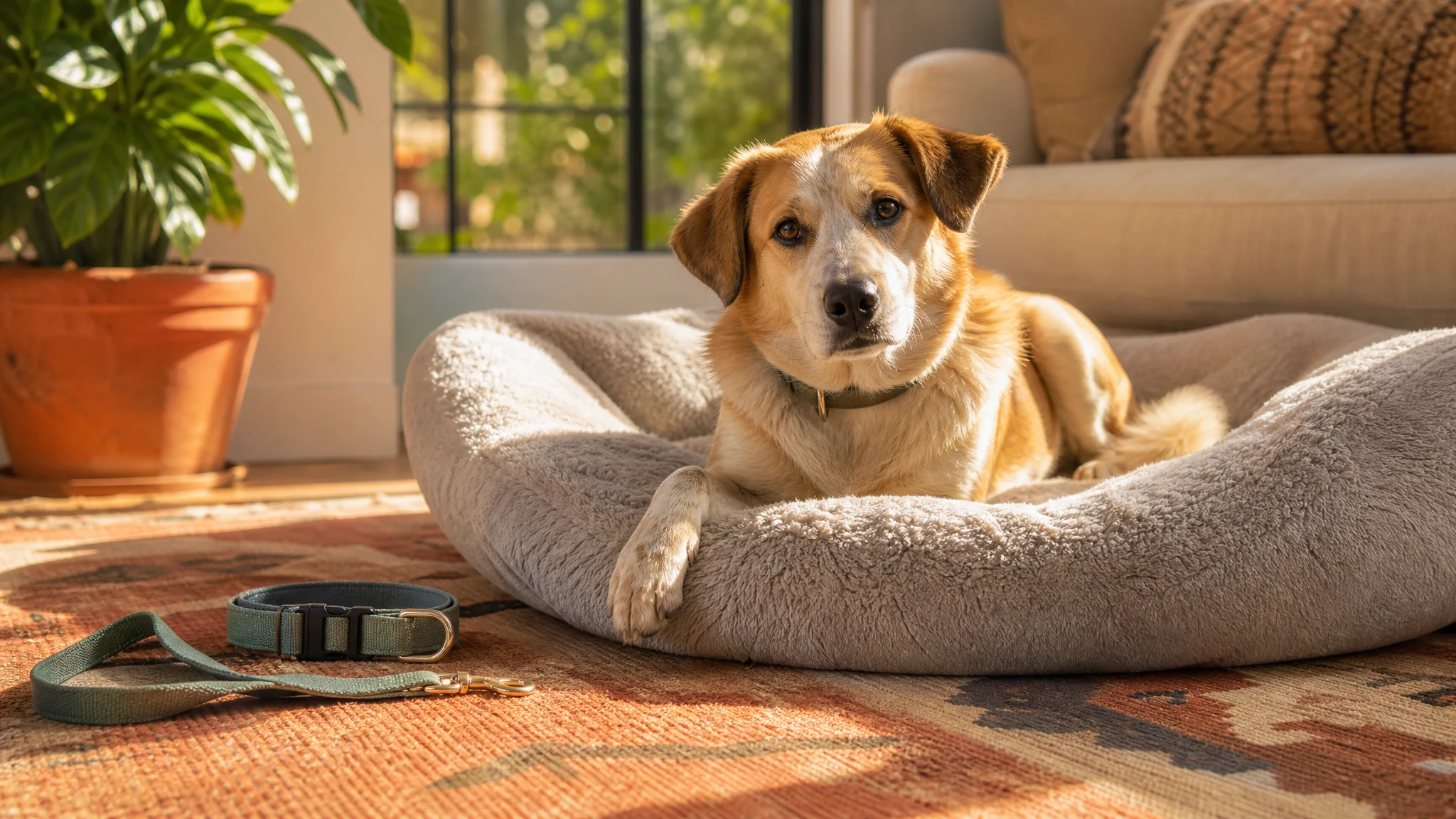
General training information. For aggression, sudden behavior changes or health concerns, see your veterinarian first.
You signed the papers, buckled the seat belt around a crate or carrier, and drove home with a dog who has no idea where they are. That first month matters, and it is also gentler than most people fear. You do not need to fix everything. You need to build safety, routine and a few simple habits.
This plan is for training a rescue dog in the first 30 days, written for Anaheim households: apartments near the resort, family homes in Anaheim Hills, and everything between. It is humane and reward-based, in line with the American Veterinary Society of Animal Behavior (AVSAB). Every dog is different, so treat the weeks as a guide and let your dog set the pace.
Where Anaheim adopters often start
Many people in Anaheim begin with OC Animal Care, the county agency. Its shelter is at 1630 Victory Road, Tustin, CA 92782, and the phone number on the County of Orange location page is 714-935-6848. OC Animal Care also provides field services for Anaheim, so it is the agency you will deal with for licensing and animal complaints too.
I cannot tell you about other shelters or rescue groups here, because I have no verified details on them. If you adopted from a private rescue, check with that group about what vaccines, microchip and medical records came with your dog. Ask for any notes on what the dog liked, feared or did in a foster home. Those scraps of history are worth a lot in week one.
If you are still deciding on outside help, our guide to dog training in Anaheim, where to train and what it costs covers your options.
What you need before you start
Keep the shopping list short. You can add things later once you know your dog.
- A well-fitted flat collar or a front-clip harness, plus an ID tag with your phone number.
- A 6-foot leash. A longer line is useful later for recall practice in a fenced space.
- A crate or a gated, dog-proofed room for rest and alone time.
- Small, soft treats your dog actually loves, cut pea-sized. Boiled chicken or part of their regular kibble can work.
- A chew or lick mat for calm time.
- Enzymatic cleaner for accidents.
- Fresh water, in more than one spot.
- A notebook or phone notes app to log meals, potty trips and anything that worries your dog.
Skip anything that corrects through pain or fear. AVSAB advises against shock, prong and choke collars, and against alpha rolls and other dominance methods. They can make a nervous rescue dog more fearful, and they erode trust you are trying to build.
Before day one: the legal basics
A few Anaheim-area rules apply from the first day.
- Leash: According to OC Animal Care, summarizing Orange County Code 4-1-45, a dog on public property must be on a substantial chain or a leash of 6 feet or less, under the charge of a competent person. Designated dog parks are the lawful off-leash exception.
- License: OC Animal Care says every dog 4 months or older must be licensed, the license renews every year, and a current rabies vaccination certificate is required to buy one. Spayed or neutered dogs get a reduced fee. I could not confirm the fee amounts, so check with OC Animal Care for current prices and deadlines.
- Rabies: California Health and Safety Code 121690 says a dog over 3 months old must be vaccinated against rabies by a licensed veterinarian. Ask your shelter or rescue for the certificate, or book a vet visit.
The 30-day plan, week by week
Week 1 (days 1 to 7): Decompression
Your dog may look fine or may look shut down. Either way, their world just flipped. Many trainers talk about the "3-3-3" idea: roughly three days to decompress, three weeks to learn the routine, three months to feel at home. It is a rule of thumb, not a schedule, and some dogs need less or more time.
- Keep the first days boring. No visitors, no dog park, no pet store trips, no big outings. Home, yard, short leash walks on quiet streets.
- Set up a safe spot. Put the crate or bed in a calm corner, not in the middle of household traffic. Leave the door open at first and toss treats inside. Let your dog choose to go in.
- Take your dog out on leash for every potty trip. Even in a fenced yard, go with them. Reward right after they finish, within a couple of seconds.
- Feed on a schedule. Two meals a day at the same times gives you predictable potty timing. Ask your shelter or vet about the food your dog was eating, and switch slowly if you change it.
- Let your dog come to you. Do not hug, loom over, or pull them out of hiding. Sit nearby, look away, and drop a treat now and then.
- Watch body language. Lip licking, yawning, whale eye, a tucked tail and stiffness all say "too much." Give space when you see them.
Common mistake: Introducing the dog to every neighbor and friend in the first weekend. It feels loving to you, but it can overwhelm them. Spread introductions out over weeks.
Week 2 (days 8 to 14): Routine and gentle manners
Now your dog is starting to learn your rhythm. Predictability is the gift you give a rescue dog.
- Lock in a daily schedule. Wake, potty, breakfast, walk, rest, play, potty, dinner, potty, bed. Keep times within about 30 minutes day to day.
- Teach "sit" with a lure. Hold a treat at your dog's nose and slowly move it up and back over their head. When their bottom touches down, say "yes" and give the treat. Do 5 or 6 repeats, two or three times a day.
- Teach a settle on a mat. Reward any time your dog lies on the mat by choice. Calm behavior you reward now becomes the habit you rely on later.
- Start short, loose-leash walks. Reward your dog for staying beside you and stop moving when the leash goes tight. Walk on if it loosens. Keep your 6-foot leash short and steady.
- Handle gently. Touch paws, ears and collar for one second, then treat. This makes vet and grooming visits easier.
Heat note: Anaheim summers and warm fall days can be hard on paws. OC Animal Care notes that at a 77 degree air temperature, asphalt can already be 125 degrees, and skin damage can happen in 60 seconds. Walk early or late, test the pavement with the back of your hand, and never leave a dog in a parked car. Always carry water.
Week 3 (days 15 to 21): House training and your dog's name
Even adult dogs can have accidents in a new home. They do not know your house rules yet, and stress can upset their bowels. Stay calm and consistent.
- Take them out often. Go out after waking, after meals, after play, after drinking, and before bed. Every 2 to 3 hours is a good start for a dog still learning.
- Use one phrase. Say "go potty" once as they start, then reward the moment they finish. Pair it with a treat and a little praise.
- Supervise indoors. If you cannot watch, use the crate, a gate or a leash tied to you. Most accidents happen when no one is looking.
- Clean accidents with enzymatic cleaner. Do not scold afterward. A dog who is punished may simply learn to hide from you when they need to go.
- Teach the name game. Say your dog's name once in a happy voice. The instant they look at you, say "yes" and give a treat. Practice 10 times in a quiet room, twice a day. Never use the name for scolding.
- Start indoor recall. From a few feet away, say "come" in a bright voice, then back up and reward when they arrive. Begin in the hallway and make it a party every time.
Common mistake: Calling your dog to you for something unpleasant, like a nail trim or ending the walk. Go and get them for those moments instead, so "come" stays a good word.
Week 4 (days 22 to 30): Alone time and wider horizons
Many adopted dogs struggle with being left alone. Build it in tiny steps, and do not skip them just because the dog seems fine at home.
- Practice very short absences. Give a chew or lick mat, step out for 30 seconds, return quietly, and reward calm. Add time slowly over several days.
- Make leaving boring. Skip big goodbyes and big hellos. A calm tone teaches that coming and going are normal.
- Vary your routine. Pick up your keys without leaving. Put on your shoes and sit back down. This takes the sting out of departure cues.
- Mind the barking rules. OC Animal Care lists Anaheim under its Adopted Ordinance Cities for barking dog complaints. It describes a barking dog as one that barks incessantly for 30 minutes or more in 24 hours, or intermittently for 60 minutes or more in 24 hours. Complaints go to the OC Animal Care Barking Dog Program at (714) 796-6442. If your dog barks while you are out, shorten the absences and talk to your vet.
- Expand outings with care. Add a new place every few days: a quiet park edge, a friendly neighbor's yard, a short car ride. Keep sessions short and watch for stress.
- Consider a dog park only if your dog is ready. Anaheim dog parks listed by Enjoy Orange County include Olive Hills (700 S Nohl Canyon Road), Maxwell (2650 W Broadway), La Palma Park (229 W La Palma Ave) and Jacaranda Park (1955 S. Jacaranda Street). Hours come from a secondary listing, so check with the City of Anaheim before you go. Many rescue dogs do better with one calm dog friend than with a busy off-leash park, especially in the first month.
One more outdoor note: OC Animal Care lists coyotes and snakes among the wildlife residents may see, and bobcats, foxes and mountain lions near open spaces. If you live near open land, keep your dog on leash, supervise yard time at dawn and dusk, and do not leave food outside.
Tips that make the month easier
- Keep sessions short. Three to five minutes, a few times a day, beats one long drill.
- Pay well. If your dog is distracted or worried, use better treats and make the task easier.
- Trade, do not grab. If your dog picks up something they should not have, offer a treat in exchange rather than pulling it away.
- Protect sleep. Adult dogs often need 12 to 14 hours of rest. A tired, overstimulated dog is not a bad dog.
- Write things down. Notes on triggers, like vacuum cleaners, men in hats or skateboards, help you plan and help a trainer later.
- Be patient with setbacks. An accident or a scared day in week 3 does not erase your progress.
Common mistakes to avoid
- Expecting your dog to act like themselves in the first few days. What you see early may not be their real personality.
- Using punishment, yelling or physical corrections. These can raise fear and may make problems worse.
- Going to crowded places too soon, like busy Anaheim festivals, parades or fireworks nights.
- Letting a dog off leash outside a designated dog park or fenced private space. The leash rule applies, and a frightened dog can bolt.
- Skipping the vet visit. A checkup in the first couple of weeks is worth it.
What to expect
Every dog's pace differs, so these are only rough hopes. Many adopted dogs begin to settle in over the first few weeks. With steady routines and rewards, a dog may start to show a more relaxed body, eat and sleep more predictably, and respond to simple cues like sit and their name. House training often improves with consistent trips outside, though some dogs need longer. Being alone can take several weeks or months to feel comfortable, and some dogs need extra help.
Thirty days is a starting point. Plenty of dogs take three months or more to feel fully at home, and that is normal.
When to call a professional
Some things are not training problems. If your dog stops eating, has repeated vomiting or diarrhea, limps, seems in pain, or changes suddenly, call your veterinarian. Medical issues can look like behavior issues.
If your dog growls, snaps or bites people, or guards food and spaces in a way that worries you, see a veterinarian first, then work with a certified behavior professional. Do not try to handle aggression alone with home tips. Keep everyone safe while you arrange help, using gates and distance.
For ordinary manners, the Certification Council for Professional Dog Trainers (CCPDT) keeps a public directory of certified trainers in California. The entries I can point to are in neighboring cities such as Orange, Placentia and Tustin, not Anaheim itself, so check each listing and confirm their methods are reward-based before you book. I do not have a verified Anaheim-based behavior consultant to name here.
Sources
- OC Animal Care, OC Pet Laws
- OC Animal Care, Barking Dog & Animal Nuisance Complaint Process
- OC Animal Care, Be Careful, the Ground May Be Hot!
- OC Animal Care, Wildlife Information
- County of Orange, OC Animal Care location page
- California Health and Safety Code 121690
- Enjoy Orange County, Dog Parks
- CCPDT, Certified Dog Trainer Directory, California