Puppy Training in Anaheim: Classes, Socialization and When to Start
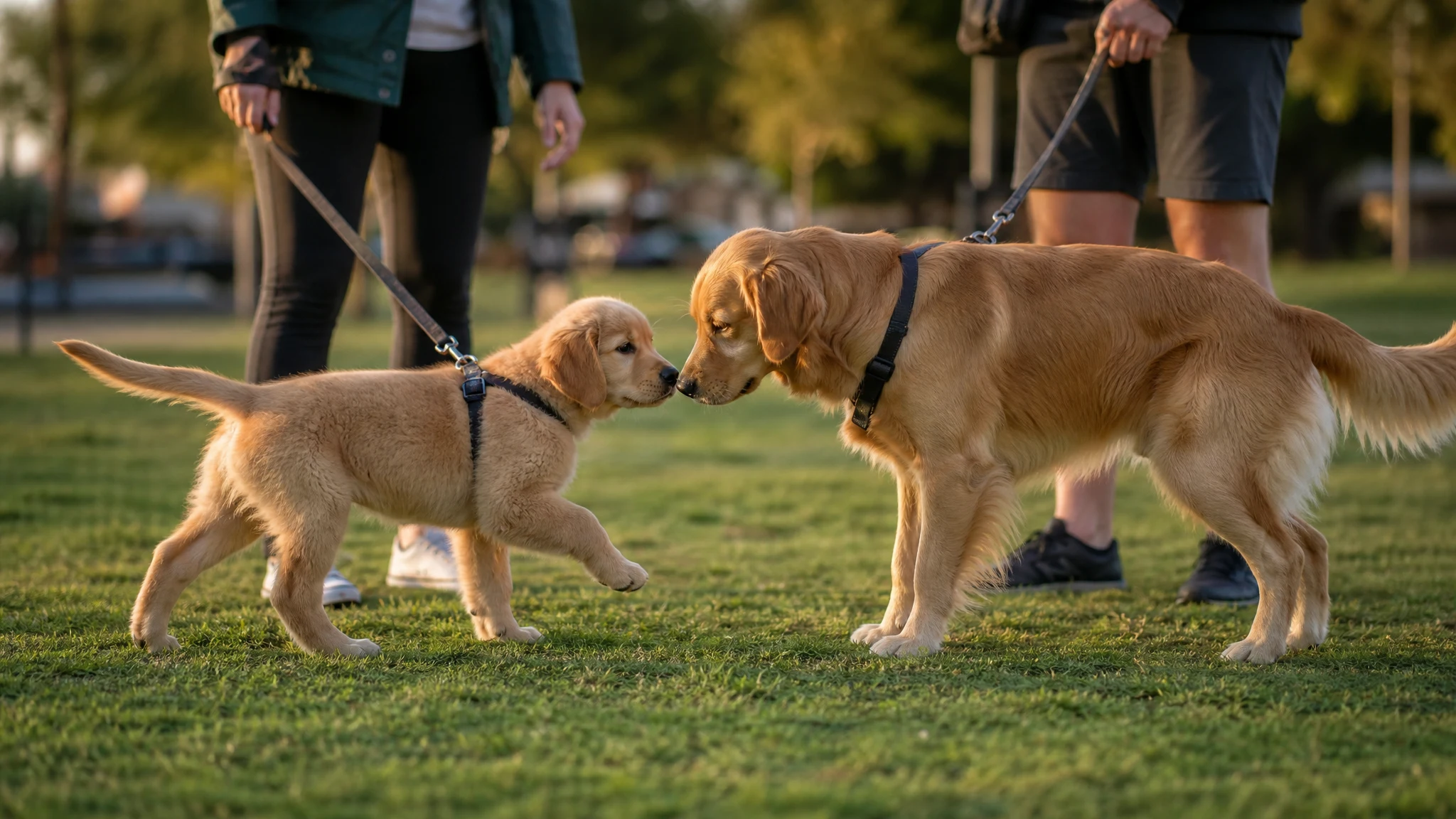
General training information. For aggression, sudden behavior changes or health concerns, see your veterinarian first.
A new puppy in Anaheim is a lot of fun and a lot of work. The good news is that puppy training does not need to be complicated. Start early, keep sessions short, pay your puppy for good choices, and introduce the world a little at a time.
This guide walks through when to start, how to choose puppy training classes, what local class requirements look like, where to socialize a puppy around the city, and what to do in the first weeks at home. It is written for Anaheim owners, so it covers local rules, heat and wildlife along the way.
What You Will Need
- Small, soft treats, pea-sized or smaller, that your puppy loves
- A flat buckle collar or a well-fitted harness, and a 6-foot leash
- A crate or a gated puppy area, with a chew toy or two
- A few chew and puzzle toys for rotating through the day
- Water for outings, and a small towel for a hot or messy day
- Your puppy's vaccination records, which you will need for classes
- A notebook or phone note to track meals, naps and potty trips
Step 1: Start Training the Day Your Puppy Comes Home
Training does not begin at a class door. It begins in your kitchen on day one. Your puppy is already learning from everything you do, so you may as well teach on purpose.
The American Veterinary Society of Animal Behavior (AVSAB) takes the position that early socialization matters and that puppy classes can begin before the vaccine series is complete, as long as sensible precautions are in place. Those precautions are the key part. Clean, controlled spaces and healthy, vaccinated dogs are very different from a busy public lawn.
Talk with your veterinarian about your puppy's vaccine schedule and what is safe for your puppy's age and health. They know your puppy's history and can tell you which settings to avoid for now.
In the meantime, begin with the basics at home:
- Say your puppy's name, then hand over a treat when they look at you.
- Teach "sit" by holding a treat just above the nose and moving it back until the bottom lowers.
- Practice short, happy handling: touch paws, ears and collar, then reward.
Keep each session to a minute or two. Stop while your puppy is still having fun.
Step 2: Know the Local Rules Before You Head Out
A few Anaheim-area rules shape your puppy plans. OC Animal Care provides field services for Anaheim, and its OC Pet Laws page is the place to confirm the details.
- Leash: According to OC Animal Care's summary of Orange County Code 4-1-45, a dog on public property must be on a substantial chain or a leash of 6 feet or less, under the charge of a competent person. Designated dog parks are the lawful off-leash exception.
- Rabies vaccine: California Health and Safety Code 121690 says that after a dog is 3 months old, the owner must have it vaccinated against rabies by a licensed veterinarian. OC Animal Care's page describes a county rule that starts at 4 months. The two differ, so follow the stricter state age and ask your vet for the date.
- License: OC Animal Care says every dog 4 months or older must be licensed, the license renews every year, and a current rabies vaccination certificate is needed to buy one. Spayed or neutered dogs get a reduced fee. For the current fee and any deadline, check with OC Animal Care directly.
Your puppy will hit these milestones during the first few months of training, so it helps to put the dates on your calendar early.
Step 3: Choose Puppy Training Classes
Good puppy classes teach you as much as they teach your puppy. Look for a class that uses treats, toys and praise, keeps the group small, lets shy puppies take a break, and explains what it is doing and why. Avoid any class that uses shock, prong or choke collars, scruffing, alpha rolls or "dominance" talk. AVSAB advises against those methods, and they are unnecessary with a puppy.
Anaheim owners will find that finding puppy classes in Anaheim itself takes some checking. The research behind this guide did not confirm a certified trainer based inside the city, so please verify any trainer yourself.
One useful tool is the certified dog trainer directory run by the Certification Council for Professional Dog Trainers (CCPDT). Its California list includes trainers in nearby Orange, Placentia and Tustin. Those are neighboring cities, not Anaheim, so check each listing for service area and ask what the trainer's credential is. The list page does not show the specific credential letters.
An example of what local class requirements look like
Wags & Wiggles, which has a location in Tustin, publishes its puppy class details on its website. It is one example of what many classes ask for, not a recommendation. According to its puppy class page:
- Puppies are accepted from 8 weeks to 5 months old. Another place on the same site says 9 weeks, so confirm the cutoff when you call.
- The puppy should have been with you at least 7 days.
- The puppy needs at least one Bordetella vaccine and at least one DHPP (distemper and parvo) dose.
- A clean fecal test is required.
The same business lists its prices: the first class is free, a single class is $60, a 4-class pack is $200, a 6-class pack (AKC Star Program) is $300, and a 4-class pack with one in-home private lesson is $395. Prices can change, so ask the business for current numbers.
Note how this lines up with the AVSAB idea. The puppy has started vaccines but may not have finished the series, and the class screens for health. Other classes will have their own rules, so ask each one the same questions:
- What vaccines and health checks do you require?
- What ages do you accept, and what is the cutoff?
- How are the play and training areas cleaned?
- What equipment and methods do you use?
- How many puppies are in a class?
Step 4: Socialize Safely Around Anaheim
Socialization means helping your puppy feel calm about new sights, sounds, surfaces and people. It does not mean letting your puppy meet every dog on the sidewalk. Quality beats quantity.
Before your puppy's vaccines are complete, ask your vet how much public ground is okay. A common approach is to carry your puppy, use a clean blanket or stroller, or sit in a quiet spot and let the world come to you. Then pair each new thing with a treat.
Easy, low-pressure ideas in Anaheim:
- Sit on a bench near a quiet street and let your puppy watch traffic, bikes and strollers from a comfortable distance.
- Visit a pet-friendly patio only if the business allows dogs, and keep your puppy close.
- Invite a calm, healthy, vaccinated adult dog you know for a short, relaxed meeting.
- Practice car rides, short and positive, ending somewhere nice.
- Let friends and family offer a treat, one at a time, without crowding.
Dog parks, with some caution
Enjoy Orange County's dog park directory lists four off-leash dog parks in Anaheim:
- Olive Hills Dog Park, 700 S Nohl Canyon Road
- Maxwell Dog Park, 2650 W Broadway (some listings give 2660 W Broadway)
- La Palma Park Dog Park, 229 W La Palma Ave
- Jacaranda Park Dog Park, 1955 S. Jacaranda Street, which the directory describes as smaller than the others
The directory says each one has separate small and large dog areas. It lists Olive Hills and La Palma as open dawn to dusk, and Maxwell as open 5 AM to 10:30 PM, closed Wednesdays from 5 AM to noon for maintenance. Hours for Jacaranda were not listed. That directory is a secondary source, so confirm hours and addresses with the City of Anaheim before you go.
For a young puppy, a busy dog park is usually too much. Wait until your vet says the vaccine series is done, then visit at a quiet time and stay near the gate. Leave if your puppy tucks their tail, hides or gets pinned by older dogs. You can also visit a park when it is empty just to sniff around the outside.
Heat, pavement and wildlife
Anaheim summers can be hard on little paws. OC Animal Care warns that asphalt can be far hotter than the air: at a 77 degree air temperature the asphalt is already 125 degrees, and skin damage can occur in 60 seconds. Try the back of your hand on the pavement. If you cannot hold it there comfortably, it is too hot for paws. Walk early or late, stay on grass or shade, and always bring water.
OC Animal Care also advises never leaving a pet in a car. Even a short errand with a puppy is not worth the risk.
Wildlife is another reason to keep your puppy on a leash. OC Animal Care lists coyotes and snakes among the wildlife residents may see, and bobcats, foxes and mountain lions near open spaces. Keep a small puppy close, do not leave one alone in a yard at dusk or at night, and check the OC Animal Care wildlife page for more guidance.
Step 5: Build a Routine for the First Weeks at Home
The first weeks go more smoothly with a predictable schedule. Puppies sleep a lot, eat on a rhythm and need frequent potty trips.
- Potty trips: Take your puppy out after waking, after meals, after play and before bed. Walk to the same spot, wait quietly, then reward right after they finish.
- Crate time: Make the crate a cozy place with a chew toy inside. Feed some meals in there. Start with a few minutes and build up slowly.
- Naps: Puppies get cranky when overtired. Quiet naps in the crate or pen help a lot.
- Short lessons: Practice name, sit, "come" and walking beside you for a minute or two, a few times a day.
- Chewing: Offer an approved chew when your puppy mouths hands. Trade up rather than grabbing.
- Alone time: Practice short, calm separations from the start so being alone is normal.
If you will be around neighbors in an apartment or townhome, build quiet-time habits early. OC Animal Care lists Anaheim under its adopted ordinance cities for barking dog complaints. It describes a barking dog as one with incessant barking for 30 minutes or more in any 24-hour period, or intermittent barking totaling 60 minutes or more in 24 hours. Complaints go to the OC Animal Care Barking Dog Program at (714) 796-6442. Teaching a puppy to settle alone now can help prevent trouble later.
Tips for Better Training
- Reward the moment you like. Timing matters more than treat size.
- Count treats as part of daily food so your puppy stays at a healthy weight.
- Practice in new rooms and yards, since puppies do not automatically carry skills from one place to another.
- Keep a calm voice and take breaks when you feel frustrated.
- Let your puppy retreat. A puppy who can walk away from something scary usually recovers faster.
- Ask family members to use the same words so your puppy is not confused.
Common Mistakes to Avoid
- Waiting until all vaccines are done to begin anything. Home training and careful socialization can start sooner. Waiting too long can mean missing a window when puppies learn quickly.
- Doing too much too fast. A long, crowded outing can leave a puppy overwhelmed. Short and pleasant is better.
- Forcing greetings. Never push a puppy toward a person or dog. Let them choose to approach.
- Using punishment. Yelling, scruffing, alpha rolls and special collars can create fear. They are not part of humane training.
- Skipping the heat check. Test the pavement before every summer walk.
- Assuming a puppy will outgrow problems. Mouthing, jumping and fear usually need guidance.
What Results to Expect
Every puppy learns at their own pace, so please treat these as general hopes rather than promises. With steady practice, many puppies begin to respond to their name and a simple sit within the first couple of weeks. Potty training often improves with a consistent schedule, though accidents are normal for a while. Puppies who are introduced gently to new things may be more relaxed about them later, although breed, background and personality all play a part.
Classes can help you spot progress and fix small problems early. Plan on practicing at home between sessions.
When to Call a Professional
If your puppy seems sick, stops eating, has repeated vomiting or diarrhea, or shows a sudden change in behavior, call your veterinarian right away. Pain and illness can look like behavior problems.
If your puppy ever growls, snaps or bites people, see your veterinarian and then work with a certified behavior professional. Do not try to handle aggression toward people with home fixes alone. The research behind this guide did not confirm a behavior professional based in Anaheim, so ask your vet for a referral and check any credentials yourself.
If you need to report an animal problem or find the county shelter, OC Animal Care is at 1630 Victory Road, Tustin, CA 92782, phone 714-935-6848.
Sources
- OC Animal Care, OC Pet Laws
- California Health and Safety Code 121690
- OC Animal Care, Barking Dog & Animal Nuisance Complaint Process
- OC Animal Care, Be Careful, the Ground May Be Hot!
- OC Animal Care, Wildlife Information
- County of Orange, OC Animal Care location
- Wags & Wiggles, puppy class page
- CCPDT, Certified Dog Trainer Directory, California
- Enjoy Orange County, Dog Parks